 Europe - FranceCamille Corotc. 1870-1872
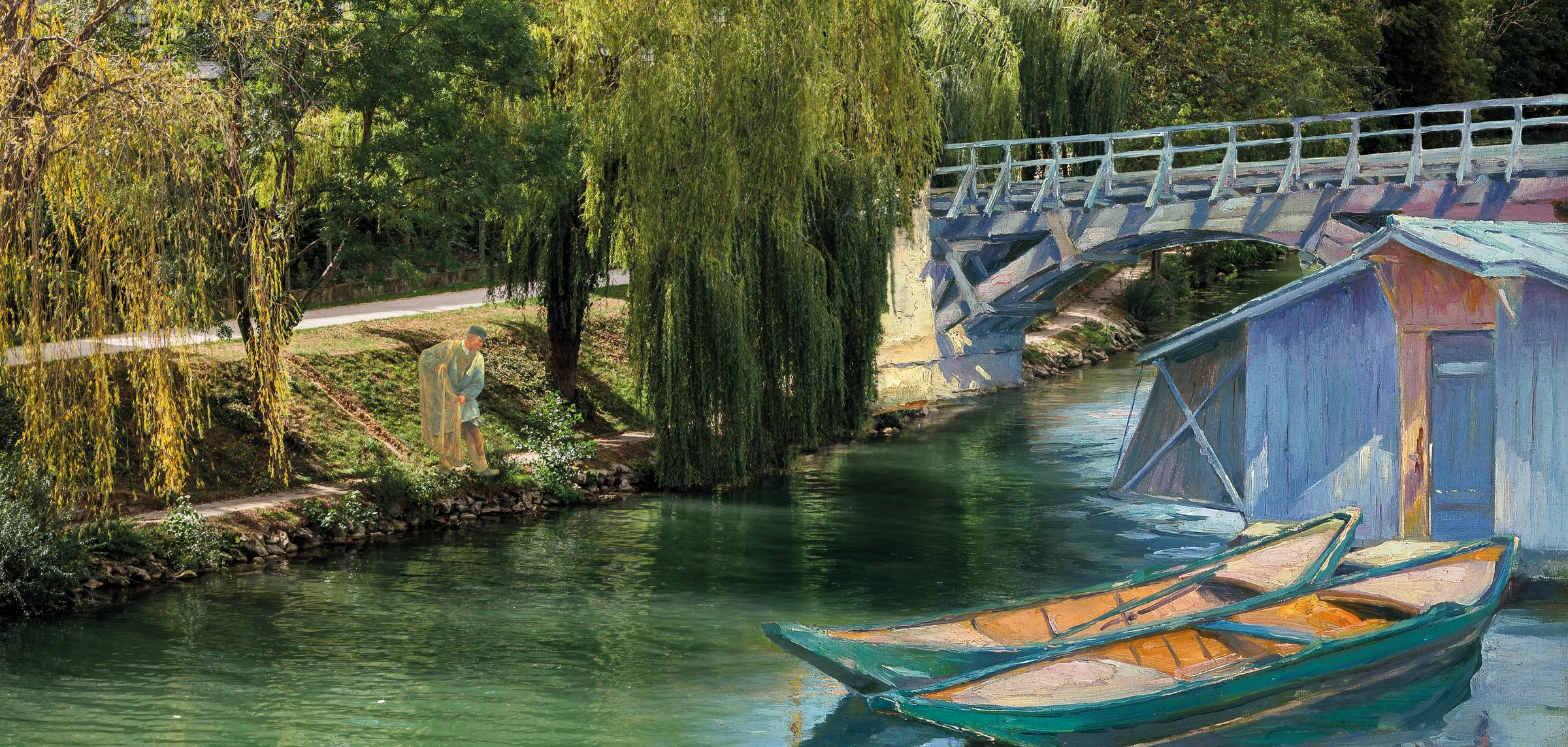
Crécy-la-Chapelle - Villiers-sur-Morin
Coulommiers - Luzancy
 Experience the land
through painting
An international artists’ colony
In the heart of the Marne and Grand Morin valleys, discover the landscapes that, for nearly seventy years, inspired artists from all over the world. Each brought a singular way of seeing, leaving behind an artistic heritage of exceptional richness.
Europe - FranceCamille Corotc. 1870-1872 America - United StatesWilliam Kaula1897
 Asia - JapanYuzō Saeki1928
 America - CanadaEmily Carr1911
 Eastern Europe - Russian EmpireAlexandre Altmannbefore 1927
Discover the colony’s story
The valleys of the Marne and the Grand Morin became an international artists’ colony as soon as the railway from Paris to Esbly opened in 1849. At first the artists were carried by horse-drawn coach from Esbly to the villages of the valleys; the extension of the line to Crécy-en-Brie in 1902 made it even easier for them to reach the Pays de Brie. These quick journeys from Paris allowed artists to come for short stays, a weekend or longer. The first paid-leave schemes, from 1853, together with better conditions for leisure travel, went hand in hand with the rise of this new kind of visitor.
The artists were won over by how easy the Brie countryside was to reach, by its beauty and its calm. Keen to break free from the elitist circuits of the Paris Salons, and enjoying a lower cost of living than in the capital, they discovered the unique light of this territory, where water shapes the landscape, feeds the land and enhances its heritage, both tangible and intangible. For these artists painting outdoors, it became an endless source of inspiration.
From the late 1850s, led by Amédée Servin and his companions, co-founders of the Cercle artistique of Villiers-sur-Morin in 1860, and until the inter-war years, international figures such as the Japanese painters Yuzō Saeki and Kiyoshi Hasegawa in the 1920s, the Canadian artist Emily Carr, the Russian painter Alexandre Altmann and the American William Kaula left their mark here, in more than seventy years of uninterrupted artistic activity.
In the inns and at village festivals, real artistic fellowships took shape. Artists met, talked and worked side by side, sharing their experiences, their influences and their view of the landscapes around them. The inns became genuine places of artistic sociability, where local artists mixed with painters from Paris and elsewhere, in an atmosphere that encouraged encounters and exchanges. Some artists even left their mark on the places that welcomed them, decorating the walls of inns in exchange for their meals. These customs show an artistic life that went beyond studios and canvases and was fully part of village life.
These encounters encouraged mutual influences and gradually opened the territory to exchanges on a worldwide scale. Over the decades, a true artistic community grew up, mixing origins, sensibilities and practices, and making the Painters’ Valleys a place of creation and sharing. Then as now, the Painters’ Valleys of the Marne and the Grand Morin carry on the legacy of this international artists’ colony, inviting visitors to experience a landscape that inspires and brings together creators of every generation.

Immersive experience
See the landscapes in a new way with augmented reality, and step into the history of the places and the paintings, right on the trail.
Get ready
Plan your visit, choose your trail and step into the history of the places and the paintings.

Plan
Plan your visit, choose your trail and prepare your discovery.
Find out more
Explore
Walk the trails and discover the landscapes that inspired the painters.
See the map
Learn
Deepen your knowledge with our research-based resources.
Resources
A cultural and heritage project
The Painters’ Valleys of the Pays de Brie celebrate a unique artistic heritage, born of the close bond between artists and our landscapes. A project led by local partners to pass on, inspire and preserve this legacy.